The Trouser Turn-Up and Its Changing Past
Learn how the trouser turn-up became a tailoring detail, and choose a hem that suits your cloth, shoes and setting without relying on rigid rules.
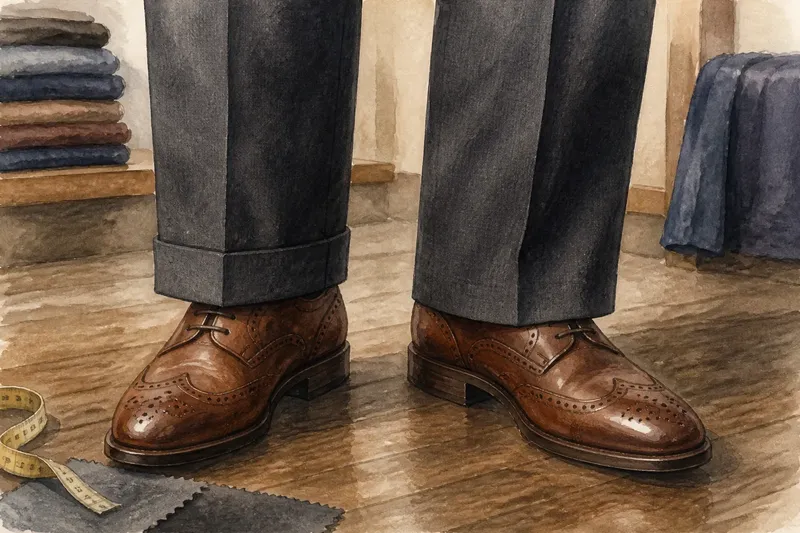
You reach for trousers before heading out and pause at the hem: a neat band of folded cloth sits above the shoe, while a plain finish falls cleanly towards it. The trouser turn-up has appeared in dress for practical and decorative reasons, though its history is not a single, settled story. Today, its effect depends on the cloth, cut and outfit around it.
Function and finish
A turn-up is fabric folded to the outside at the bottom of a trouser leg. It is also called a cuff, though “cuff” can suggest a sewn finish, while “turn-up” draws attention to the visible fold. Either way, the extra band changes the outline of the leg.
Some accounts connect turn-ups with the practical habit of keeping trouser hems clear of mud or wet ground. That explanation is plausible, but it should not be treated as a complete origin story: clothing customs vary, and the reasons for a particular detail can be difficult to pin to one moment or place.
In tailored dress, the fold became a deliberate finish. It can add visual weight at the hem and give the leg a defined edge. Over time, it also came to signal a preference for a particular kind of tailoring, rather than serving only as a temporary adjustment.
Its associations shift with the outfit. A turn-up can suggest traditional tailoring, a relaxed finish or a nod to a period style; fabric, cut, shoes and setting all influence the impression.
Cloth and occasion
For a formal suit, consider the whole silhouette. A plain hem creates a quieter line, while a turn-up can suit substantial cloth or a softly structured jacket. If the suit already has conspicuous details, the simpler finish may keep the outfit balanced.
On everyday tailored trousers, a fold can add definition. Wool and tweed often hold a visible edge, whereas very light or fluid cloth may look weighed down by an extra band.
With casual trousers, a turn-up can work with loafers, brogues or sturdy boots. A denim roll is usually a more changeable styling choice than a sewn tailored cuff; it can be adjusted for the day, though it may loosen as you walk.
On cropped trousers, a cuff makes the ankle more noticeable. That can bring attention to shoes, but it may also make an already short leg look abruptly divided. Try the trousers with the shoes you plan to wear.
In muddy or hands-on conditions, a temporary fold may keep cloth clear for a while, but it is no replacement for suitable footwear or workwear. A permanent cuff can collect grit inside its fold, so a plain hem may be easier to brush and care for.
Proportion at the ankle
A turn-up creates a horizontal line that draws the eye to the ankle. It can give a straight leg a deliberate finish, but the added visual weight may make a short or wide leg seem more compact.
Check how the cloth meets the shoe. If fabric piles into a thick ridge above the fold, the trousers may be too long for those shoes, or the leg may be too full for the intended silhouette.
Shoe shape affects the balance. A slim leather shoe can make a broad cuff feel prominent; a heavier shoe may sit more comfortably beneath it. Rather than matching cuff width to shoe size by rule, assess the complete outline in a mirror.
Say you have charcoal wool trousers, brown brogues and a softly tailored jacket for an informal dinner. You try the trousers with their plain hem, then fold the existing hem up temporarily, keeping the rest of the outfit unchanged. If the fold makes the leg look grounded beside the substantial shoes, it is a plausible choice; if cloth bunches at the ankle, the plain finish gives a cleaner line. This comparison helps you decide whether to ask a tailor about a permanent cuff.
Which finish suits you?
Are turn-ups formal?
They can suit formal clothes, but they are not automatically formal or informal. Cloth, cut and setting matter more than the fold alone.
Do turn-ups make legs look shorter?
They can create that impression by drawing a line across the ankle, especially on short or wide trousers. A plain hem gives a more continuous visual line, while a well-balanced cuff can make a full-length leg look considered.
Can any trousers be turned up?
A temporary roll works on many casual trousers, but a tailored cuff needs enough fabric and a suitable leg shape. A tailor can assess whether the cloth and existing hem allow an alteration.
Should turn-ups match the shoes?
They need not match in colour or style, but their visual weight and formality should make sense together. Judge them with the complete outfit, since a shoe and cuff that look fine separately may crowd one another.
Permanent or temporary
A sewn turn-up is a lasting alteration. Whether it can later be opened depends on the garment’s construction, available fabric and any marks left by the existing fold. A tailor can inspect the specific pair and explain the options.
A temporary roll offers flexibility, but it can loosen or sit unevenly. Repeated folding may leave a crease in some fabrics. If you wear the same trousers in settings that call for different finishes, keeping a plain hem may preserve more choice.
Perfectly identical casual rolls are not worth chasing. If both hems clear the shoes and sit comfortably, a slight difference is usually less distracting than repeatedly unrolling and refolding them.
Fabric and care
A firm wool cloth can hold a crisp fold, while a softer linen blend may crease and relax more casually. Lightweight cloth can bunch inside a cuff; bulky fabric can make the hem feel dense.
Look at colour and pattern as well. A contrasting inside face may show when folded, and a patterned cloth’s repeat may be interrupted at the ankle. On plain trousers, the band can add a quiet change in texture.
Follow the garment’s care label and maker’s instructions before pressing or cleaning a folded hem. Delicate or blended fabrics may react poorly to heat or pressure, and some suit cloths can develop unwanted shine.
Turn-up decisions at a glance
- Check whether the cloth is firm enough to hold a fold; if it stays crisp, then consider a cuff, otherwise choose a plain hem or try a loose temporary roll.
- Check whether fabric bunches above the shoe; if it forms a ridge, then adjust the length or choose a plain hem, otherwise keep comparing the silhouette.
- Check whether the trousers are cropped already; if the ankle line feels abrupt, then favour a plain finish, otherwise use the cuff to draw attention to the shoes.
- Check whether a sewn cuff would suit the settings where you wear the trousers; if you need varied styling, then keep a plain hem or use a temporary roll, otherwise ask a tailor about a permanent finish.
- Check whether the inside face contrasts strongly with the outer cloth; if it distracts, then use a plain hem, otherwise let the contrast contribute to the outfit.
- Check whether the cuff’s weight balances the shoes; if a slim shoe looks overwhelmed, then choose a narrower or plain finish, otherwise keep the fold if the full outline feels balanced.
A changing detail
The trouser turn-up is not simply a relic of muddy streets or a fixed badge of good taste. Practical explanations are part of its story, but the fold also became a considered tailoring finish whose meaning changes with its surroundings.
Use “trouser turn-up” as a prompt to ask what the fold adds to this particular outfit. If it suits the cloth, balances the shoe and gives the leg a clear finish, it may be right; if it creates a line you do not need, a plain hem is equally deliberate.