Why a Jacket Lining Changes the Way It Sits
Why a jacket lining changes the way it sits: learn what to notice in movement, surface finish and layering before choosing a jacket.
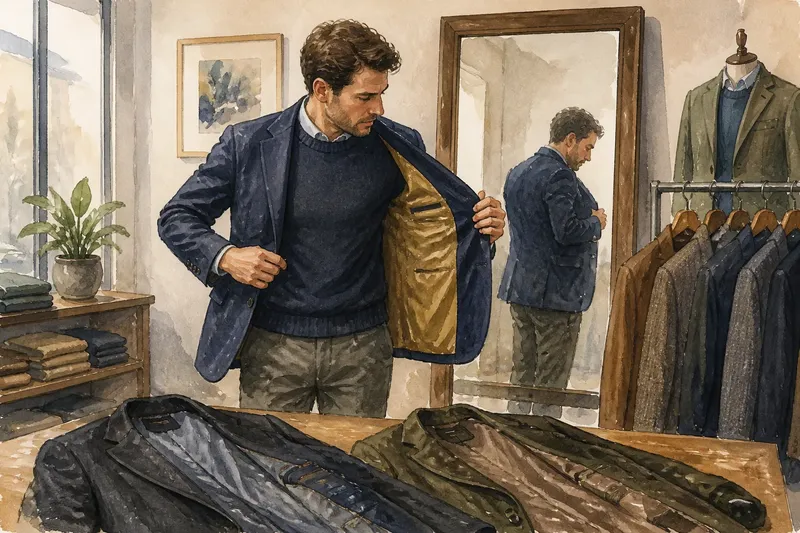
You slip on a jacket over a fine-knit jumper, reach for the door and feel the sleeves tug at your wrists. The jacket lining may be part of the reason. It affects how the outer cloth moves against your clothes, how the inside is finished and how freely the jacket follows your body.
When comparing jackets, look beyond whether the lining is present. Notice where it covers, how it is attached and what happens when you move. These details can help explain familiar annoyances, from a twisted sleeve to a jacket that rides up over a shirt.
When sleeves catch
A sleeve that drags against your shirt can make a jacket feel awkward even when the shoulder seems to fit. The lining’s surface matters: a smooth lining generally slides more readily over a woven shirt or knit, while a rougher or more textured interior may grip soft fabrics. A close-fitting sleeve can add to the friction, leaving little room for either layer to shift independently.
Try the jacket over the sort of top you expect to wear beneath it. Bend your elbow, reach forward and let your arm hang naturally. If the sleeve pulls the shirt up or bunches at the elbow, check whether the discomfort comes from friction at the lining, tight sleeve ease, or both. A different underlayer may help, but a persistent pull can point to a fit issue rather than a lining problem alone.
When the jacket rides up
A jacket may creep towards the shoulders as you lift your arms or move across your body. The lining can resist movement if it is taut across the back, caught at a seam, or attached in a way that limits the outer cloth’s freedom. A tight upper back, narrow armhole or short body can create a similar sensation, so the lining is not automatically the culprit.
Watch the hem as you reach forward and then lower your arms. If it rises and stays there, smooth the jacket down and see whether the lining settles with it. A lining that bunches or pulls separately from the shell suggests one kind of restriction; a jacket that strains across the shoulder blades suggests that the overall cut may be too restrictive for the movement you need.
When the back wrinkles
Soft folds inside a jacket are not always a fault: a lining needs some allowance to move with the body. But a twisted or gathered lining can make the outer back sit unevenly, especially if the inner layer is caught at a seam or hangs off-centre. Look at the jacket while it is on, rather than judging the lining only on a hanger.
Stand naturally, then turn your torso gently from side to side. Notice whether the outer fabric forms a new crease in the same place as an inner fold, or whether the lining moves independently. If the lining is visibly pulling the shell out of shape, try another jacket in the same size and compare its back. A professional alteration may be appropriate for a valuable garment, but do not assume every internal wrinkle can be corrected by loosening a seam.
When layers feel crowded
A lining changes the space available between the jacket and your clothes. A jacket that feels comfortable over a shirt may become restrictive over a jumper, while a roomy cut can accommodate more layers without needing a slippery lining. The shoulder, chest and sleeve matter as much as the lining’s surface.
Say you are choosing between two jackets for wear over a mid-weight jumper. Imagine one has a smooth full lining and a close sleeve, while the other is cut more generously with a partial lining. Try each with the jumper, reach across your chest and lift your arms. If the first jacket catches at the forearm while the second moves freely, the difference may reflect both sleeve room and lining coverage; the useful choice is the one that feels comfortable in the layer you will actually wear.
When the finish feels bulky
Some jackets have a lining across the whole body and sleeves; others leave parts of the interior exposed or use a partial lining. Full coverage can give the inside a neat, enclosed finish, while partial coverage may leave more of the shell’s structure visible and reduce the amount of fabric between you and the garment. Neither arrangement is inherently better: construction, climate, intended use and personal comfort all matter.
Inspect the interior around the armholes, side seams and hem. A clean finish should not have loose edges that catch on your clothes, and the lining should not form conspicuous ridges beneath the outer cloth. A little movement or ease inside is useful; a lining pulled drum-tight can restrict the jacket, while excessive loose fabric may bunch as you put it on.
What should you compare?
Does a full lining always feel smoother?
No. The material and finish determine how readily it slides, and a full lining can still grip a particular shirt or knit. Try the jacket over your usual layers and pay attention to the sleeves and shoulders.
Can a partial lining improve movement?
It can leave some areas less covered, which may change how the jacket feels against a shirt and how much internal fabric shifts. The cut and placement of the lining still matter, so judge the whole garment in motion.
How can you tell if the lining is too tight?
Move your arms forward and overhead, then check whether the lining pulls sharply or makes the shell ride up. If the whole jacket strains across the back or chest, the pattern or size may be involved as well.
Should a lining be completely wrinkle-free?
No; a small amount of ease allows it to follow the body. Look instead for persistent twisting, bulky gathers or folds that appear to pull the outer fabric out of place.
What to try first
Compare jackets in a consistent way so that one feature does not distract from another. Start with the same base layer, then add the shirt or knit you would ordinarily wear. Check these points:
- Shoulder reach: Extend your arms forward and notice whether the back pulls or the hem lifts.
- Sleeve glide: Bend and straighten your elbows to see whether the lining catches your cuffs or gathers at the forearm.
- Layer space: Wear your intended top and check for pressure across the chest, upper back and upper arms.
- Interior lay: Look for lining that twists, bunches or sits unevenly when the jacket is on.
- Hem movement: Raise your arms, lower them and see whether the jacket settles back without repeated adjustment.
- Finish and coverage: Compare full and partial linings for comfort, neatness and the amount of interior fabric against your clothes.
Do not spend time chasing a perfectly flat lining on a hanger; the garment is made to be worn, and its movement matters more than a showroom-still interior. Also, avoid pulling at loose lining seams yourself, since the cause may sit elsewhere in the construction. Care instructions and alteration options depend on the garment and its maker; check the label or ask a qualified tailor when the jacket needs repair.
Choose by movement
Why a jacket lining changes the way it sits is easiest to judge with the jacket on and your arms moving. A smooth surface may help layers slide, while the amount and placement of lining can affect finish and freedom. Compare the shell and lining together, with the clothes you plan to wear, and let comfort in ordinary movement guide the decision.